





18+ Please Gamble Responsibly GambleAware
SP in horse racing stands for Starting Price, which is the official odds of a horse when the race begins. Instead of taking the price offered earlier in the day, punters can choose to bet at SP, meaning their wager is settled using the final market odds at the moment the race starts.
The starting price in horse racing reflects the betting activity leading up to the race. As punters place bets throughout the day, bookmakers adjust their odds to balance the market. When the race begins, the final SP horse racing bettors receive represents the consensus price based on those market movements.
Understanding SP helps punters decide when to place a bet on horse racing. Some bettors prefer waiting for the starting price, while others take advantage of early prices available earlier in the day. In this guide, we explain what SP means in horse racing, how the starting price is calculated, and how it compares with early odds.
What Is SP in Horse Racing?
SP in horse racing stands for Starting Price. It is the official odds of a horse at the exact moment a race begins. If a bettor selects “Bet at SP”, the bookmaker settles the wager using the final market odds when the race starts.
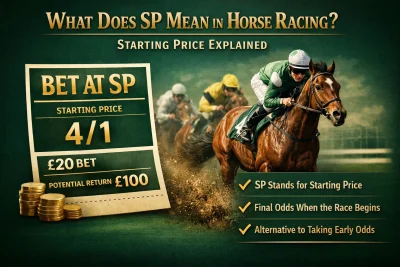 The starting price in horse racing reflects the final betting market just before the race begins. Throughout the day, bookmakers adjust their odds based on betting activity. If many punters back a particular horse, the odds may shorten. If support for a runner is weak, the odds may drift. When the race is about to start, the betting market settles and the SP horse racing bettors receive becomes the official price for that race.
For example, a horse might open at 5/1 early in the morning. As betting continues throughout the day, strong support from punters could push the odds down to 4/1 by race time. If you selected “Bet at SP” when placing your wager, the bet would be settled using the 4/1 starting price, not the earlier odds.
This approach appeals to bettors who prefer a simple way to place horse racing bets without worrying about odds movements during the day. Instead of choosing between fluctuating prices, the bettor allows the market to determine the final odds when the race begins.
However, it is important to understand that SP in horse racing does not always provide the best available odds. In many cases, bookmakers release early prices for races hours before the start, and these can sometimes offer better value if the odds shorten before the race. For this reason, experienced bettors often compare starting price betting with early odds before deciding when to place their bet.
How the Starting Price (SP) Is Calculated
The SP is not set by a single bookmaker. It is calculated using the prices offered by the best bookmakers in the horse racing betting market just before the race starts.
In the UK, the official SP used by most bookmakers is known as the Industry Starting Price (ISP). This price reflects the balance of the betting market at race time and aims to provide a fair representation of the odds available.
Industry Starting Price Explained
The Industry Starting Price is calculated using odds from a panel of on-course bookmakers at the racecourse. These bookmakers display their prices shortly before the race begins. A group of officials then reviews the available odds and determines a starting price that allows the maximum amount of money to be matched across the betting market.
This process ensures the SP reflects the true market price of a horse at the moment the race starts. Once the SP is declared, bookmakers use that price to settle any bets placed at “Bet at SP”.
For example, if several bookmakers offer odds between 5/1 and 6/1, the calculated SP may settle somewhere within that range depending on the balance of bets in the market.
Why SP Changes Before the Race Starts
The starting price can move several times before the race begins because the betting market is constantly adjusting. Bookmakers alter their odds in response to new information and betting activity.
Several factors influence SP movements in horse racing:
- Heavy betting support – If many bettors back a particular horse, bookmakers shorten the odds.
- Lack of interest – If a horse receives little support, its odds may drift to attract bets.
- Late information – News about a horse’s fitness, jockey changes, or race conditions can influence betting patterns.
- Market reactions – Professional bettors and trading activity can cause rapid price adjustments.
Price movements often reflect how punters interpret race form and recent performances. Because of these factors, the SP horse racing bettors receive can be quite different from the prices available earlier in the day.
Example of a Starting Price Bet
To understand how Starting Price (SP) works in horse racing betting, it helps to look at a simple example. The key point is that when you choose “Bet at SP”, your return is calculated using the final odds when the race begins, rather than the price available earlier in the day.
Imagine a horse is running in a race at Ascot. Early in the morning, bookmakers may offer odds of 5/1 on that horse. As the day progresses, more bettors begin backing the runner and the price shortens. By the time the race starts, the SP horse racing market settles at 4/1.
If you placed a £10 bet at Starting Price, the bet would be settled at the final SP of 4/1, even though higher odds were available earlier.
Here is how the difference can look in practice:
| Bet Type | Odds Used | Stake | Total Return |
| Early Price Bet | 5/1 | £10 | £60 |
| Bet at SP | 4/1 | £10 | £50 |
In this example, taking the early price would have produced a higher return because the odds shortened before the race started. However, the opposite can also happen. If a horse receives little support and its odds drift from 5/1 to 7/1, a bettor who chose SP in horse racing betting would benefit from the larger price.
This example shows why some punters prefer to bet at Starting Price, while others take early odds when they believe a horse’s price is likely to shorten before the race begins.
SP vs Early Prices in Horse Racing
When placing a bet on horse racing, punters usually have two options. They can take the early odds offered by bookmakers, or they can choose to bet at Starting Price (SP) and accept the final odds when the race begins. Both approaches are common in UK racing, and each has advantages depending on how the betting market moves.
Understanding the difference between SP and early prices in horse racing helps bettors decide when to place their bet.
Betting at Early Odds
Early prices are the odds bookmakers release when the market first opens for a race. These prices can appear the evening before racing or early in the morning on the day of the race. Often with major race meetings, such as the Grand National, early odds can be set weeks and months in advance.
Many experienced bettors prefer early prices because they can sometimes secure better value before the market reacts to heavy betting activity. If a horse attracts strong support during the build-up, bookmakers will shorten the odds. In this situation, taking the early price results in a higher potential return than waiting for the starting price.
Another advantage of early betting is the Best Odds Guaranteed (BOG) promotion offered by many UK bookmakers. With BOG, if you take early odds and the SP horse racing market settles at a higher price, the bookmaker will still pay out at the better starting price.
This protection allows bettors to take early odds without worrying about missing out if the price drifts before the race.
In practice, the choice between early prices and SP depends on how confident someone is about the direction of the market. If you believe a horse’s odds are likely to shorten, taking the early price may offer better value. If the odds may drift, waiting for starting price betting could produce a larger return.
Industry Starting Price vs Betfair Starting Price
When discussing SP in horse racing, it is important to understand that there are actually two different types of starting price used in the betting market. The most common is the Industry Starting Price (ISP) used by bookmakers, while betting exchanges such as Betfair use their own version known as the Betfair Starting Price (BSP).
Although both represent the final odds at the start of the race, they are calculated in different ways.
Industry Starting Price (ISP)
We covered the Industry Starting Price earlier, but to recap, it is the official SP used by most traditional bookmakers in the UK. It is determined using the prices offered by bookmakers at the racecourse shortly before the race begins. But how does it differ from Betfair’s SP?
Betfair Starting Price (BSP)
The Betfair Starting Price, often shortened to BSP, works slightly differently because it comes from a betting exchange rather than a traditional bookmaker.
On Betfair, bettors can both back and lay horses, meaning they are effectively betting against each other rather than against the bookmaker. The BSP is calculated using the unmatched back and lay bets available in the exchange market just before the race begins.
Betfair’s system then balances the market to create a starting price where the maximum number of bets can be matched.
Because exchange markets often have strong liquidity, the Betfair Starting Price can sometimes be higher or lower than the Industry SP. Many experienced bettors compare the two prices to see where the best value lies.
When Should You Bet at Starting Price?
Choosing Starting Price (SP) can be useful when the betting market is difficult to predict. While many bettors aim to secure early odds, there are situations where waiting for SP is the better option.
One common scenario is when a horse’s odds are likely to drift before the race. If a runner receives little betting support during the day, bookmakers may increase the price to attract wagers. In this case, waiting for the starting price could produce a better return than taking the early odds.
Betting at SP also makes sense when placing a bet close to race time. If you analyse the race shortly before the off, choosing SP avoids the need to compare rapidly changing odds across bookmakers. The bet is simply settled using the final price when the race begins.
SP can also be useful when the market is volatile. Late information such as changes in the going, jockey switches, or large bets from professional gamblers can cause odds to move quickly.
In practice, experienced bettors assess the market and decide whether to take the early odds or wait for SP, depending on how they expect the price to move before the race.
FAQ About Starting Price in Horse Racing

Is SP better than early odds?
SP is not always better than early odds. If a horse’s price shortens during the day, bettors who took the early odds will receive a better return. However, if the odds drift before the race, waiting for the starting price could result in higher winnings.
What is the difference between SP and BSP?
SP (Starting Price) is the official bookmaker price used to settle bets when a race begins. BSP (Betfair Starting Price) is calculated using the betting exchange market on Betfair, where bettors back and lay horses against each other. Because the markets operate differently, BSP can sometimes be higher or lower than the traditional SP.
Do all bookmakers offer SP betting?
Most UK bookmakers allow punters to place wagers at Starting Price. Instead of choosing specific odds, the bettor selects “SP”, and the bookmaker settles the bet using the official starting price once the race begins.
What happens if you bet at SP and the odds drift?
If you bet at SP and the odds drift before the race starts, you receive the higher price. For example, if a horse moves from 5/1 earlier in the day to an SP of 7/1, your bet would be settled at 7/1.
Final Thoughts on SP in Horse Racing
Starting Price (SP) plays a key role in UK horse racing betting. It represents the official odds of a horse when the race begins, reflecting the final state of the betting market after all price movements throughout the day.
For many bettors, choosing “Bet at SP” offers a simple way to place a wager without tracking odds changes. The final price is determined at race time, which can sometimes benefit bettors if a horse’s odds drift before the off.
However, SP is only one option. In some cases, taking early prices can offer better value, particularly when strong betting support causes a horse’s odds to shorten during the day. In all honesty, we rarely ever take the SP, often preferring to bet early at the longer odds, especially for big events.